⏰🥱👉 TL;DR (for tired dog parents steering through a medical maze)
After devastating collapse, followed by major surgery, Cat came home frail and thin but thankfully recovering. Throughout, there were a number of things I didn’t understand and hadn’t even heard of. This post shares the surgical and post-surgical information we learned.
The vet hospital called: Cat was being discharged. She’d had to stay so long because of the state she’d been in — barely alive due to the botched care at the first ER clinic — by the time we got her to NC State.
We jumped into the car to go get her. When they brought her out, her pitiful tail was wagging as well as it could. She was scrawny, having lost so much blood, along with her spleen with that evil tag-along tumor.
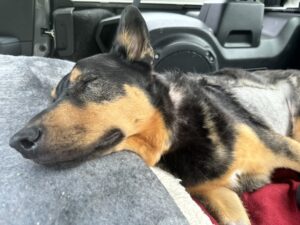
Much of her hair had been shaven for diagnostics, IVs, monitors, and surgery, leaving a gruesome 10+ inch stapled scar down her belly. (Photo below; a bit graphic but could be helpful for those in or preparing for this situation.)
Once home, she was lethargic, wobbly, and confused — not unexpected
Additional details to add about the surgery:
-
-
Auto-transfusion: Instead of a blood transfusion, they used an “auto-transfusion” to recycle her own blood from her abdomen caused by the internal bleed, putting it back into her circulatory system. While this avoids risks associated with dog blood transfusions, it can potentially lead to a more extensive spread of cancer if the tumor is malignant (via micrometastasis). This is why dogs who have surgery prior to the rupture have a better life expectancy. If it’s canine hemangiosarcoma (HSA), however, the tumor grows so quickly that it’s not typically detected until a rupture.
-
-
-
Gastropexy: On large breed dogs, the surgical team often performs a procedure called a gastropexy immediately following the splenectomy. This surgery prevents the stomach from twisting (i.e. from gastric dilatation-volvulus — GDV — or bloat), a life-threatening condition. However, due to concerns about Cat’s stability under anesthesia, they skipped this procedure. We’ll now need to manage her post-meal activity carefully.
-
Wound Protection:
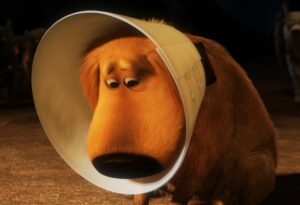 The hospital gave us an Elizabethan collar for her to wear to make sure she did not lick, bite, or scratch at her wound. She didn’t last one minute in that thing, though. More on an alternative we found in a post to come.
 -
Cost: This is a big one. As soon as I have the time, I’ll get to this in another post, as well. [Update: new post on cost here]
-

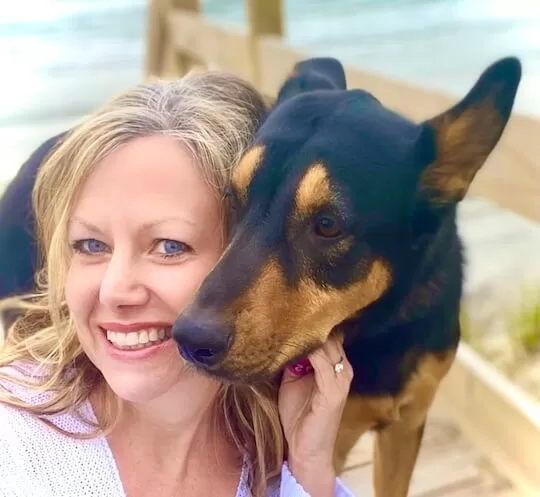 Carrie Stewart is a journalist and award-winning TV producer-turned-advocate for canine cancer awareness after working night and day for months on end to help her German Shepherd foster-fail/rescue pup, Cat the Dog, head off hemangiosarcoma for as long as she possibly can.