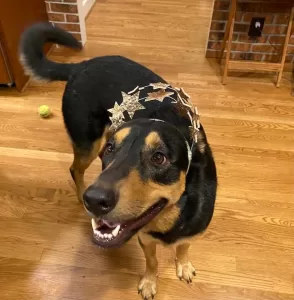
So as mentioned in multiple posts, Cat is now on a new cutting edge therapy to specifically target the genetic mutations causing her cancer. One of the drugs she’s taking is called rapamycin (generic name: sirolimus).

One thing that caught us off guard is that when she went back for her 7.5 month restaging, her blood and metabolic panels were perfection! She’d not even had such stellar numbers before the cancer, much less throughout this process. Until now.
At that point, she’d been on rapamycin for 2 months. Could there be a connection? Perhaps!
It turns out that recent scientific studies are now calling rapamycin a breakthrough drug from the world of cellular biology that’s quietly making tails wag a little longer. This compound, originally used as an immunosuppressant in human transplant patients, has taken a fascinating detour into the realm of dog longevity. And it’s causing quite the stir among researchers — and dog lovers!
🐾 Why Rapamycin in Dogs?
Rapamycin works by dialing down mTOR, a key regulator of cellular growth and aging. In lab animals — like mice, flies, and worms — it’s routinely extended lifespans and delayed aging. But typical lab pets don’t live with us, eat our food, get our couch crumbs, or face our stressors. That’s why scientists decided to see if rapamycin could have the same impact on our pups. Hence, “The Dog Aging Project (DAP).” [Source: The Guardian]
A Promising Start: The 10-Week Study
Back in the mid‑2010s, researchers ran a randomized, placebo‑controlled trial with 24 middle-aged companion dogs (16 got rapamycin, 8 got placebo) for 10 weeks. The results:
No major side effects—dogs stayed happy and healthy.
Improved heart function—mirroring benefits seen in mice.
Longer red blood cell survival—hinting at subtle anti-aging effects.
Owners even reported that treated dogs seemed more active and playful. One high-dose Doberman, famous for its breed’s heart issues, showed especially impressive cardiac improvement.
The Big Leap: The TRIAD Trial
Fast-forward, and now there’s TRIAD (Test of Rapamycin In Aging Dogs)—a huge multicenter, double‑blind, placebo‑controlled trial with ~580 dogs planned. Dogs aged 7+, healthy, and over 44 lbs enroll at DAP-affiliated vet clinics nationwide.
Each dog gets rapamycin once a week for one year (placebo for others), then all are followed for at least two more years.
The primary question: Does rapamycin truly extend lifespan?
Secondary questions: Does it improve heart and cognitive health, mobility, immune function?
Thanks to a $7 million NIH award, there are now over 20 clinical sites enrolling participants. About 200 dogs have already started—Mission Control has ambitious targets! [Source]
Why This Matters: For Dogs…and Us
Dogs are more than lab animals—they’re family. Helping them live healthier, longer lives is its own beautiful reward. But the implications go beyond the backyard. Dogs share our environments and our lives, making them incredible sentinels for human aging research. If rapamycin promotes longevity in dogs, it’s a powerful hint we might harness the same pathway for ourselves.
Waiting for the Final Bark 🧬
TRIAD is still in progress—with results expected after a couple more patient years. Experts anticipate detecting statistically meaningful lifespan improvements (around 9%). [Source]
Until then, what do we know?
✅ Low-dose rapamycin is safe in real-world dogs.
✅ It improves heart health, boosts vitality, and might even support cognitive function.
✅ Ongoing study is carefully tracking long-term outcomes.
How You Can Stay in the Loop
Follow the Dog Aging Project on their website for updates and new enrollments.
Talk to your vet if you’re curious—some clinics are active TRIAD sites.
Spread the word—share with fellow pet parents who want their pups to not just age—but flourish.
Final Sniff
Rapamycin’s journey has gone from transplant rooms to tiny worms, lab mice, and now our living rooms—helping pups live more vibrantly with their favorite humans. As TRIAD marches on, we watch with hopeful hearts. Because at the end of the day, every extra playful romp and slow-motion tail wag is not just another week—it might be a new chapter in both canine and human longevity.
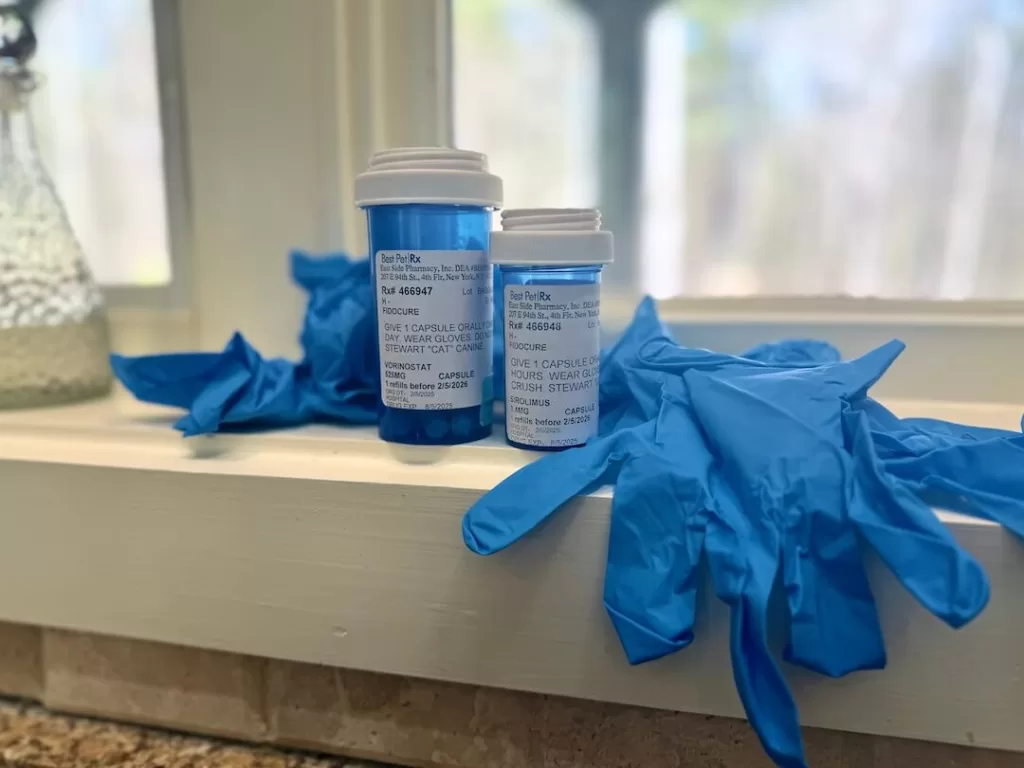
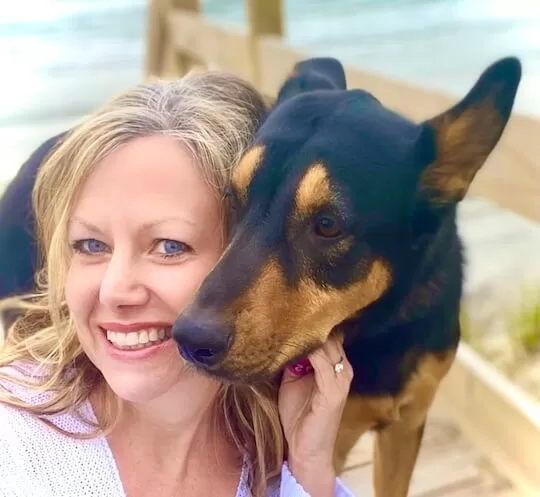 Carrie Stewart is a journalist and award-winning TV producer-turned-advocate for canine cancer awareness after working night and day for months on end to help her German Shepherd foster-fail/rescue pup, Cat the Dog, head off hemangiosarcoma for as long as she possibly can.