Good news and bad news…
The good: We received the FidoCure report.
The bad: Cat has the most aggressive genetic mutation for the most aggressive canine cancer.
Also bad: Cat definitely has cancer. I realize how inane that sounds, but since the diagnosis, Craig & I have managed to hold on to this fantastical (read: delusional) idea that perhaps the pathology report was wrong. 
False-positives do happen, after all. Just not to us.
The results took a little longer to get back than the website lists (um, because: the holidays. duh), so we’d convinced ourselves FidoCure was chasing down NC State Vet Hospital to let them know she never even had cancer.
Not so much.
With denial now dismissed for good, we both hunkered down for hours going through the information in the report, while googling things like “tumor suppressor genes,” “pro-apoptotic balance,” “mTOR inhibitor,” etc. etc.
The 20-page report, complete with citations, detailed each mutation, what the gene was meant to do, what its mutation does, how it factors into human cancers, and a potential therapeutic approach to addressing it (i.e. drug and dosage information).
Cat’s identified mutations are: ATRX, CDKN2A, PIK3CA, & P53
- The first, ATRX, was categorized as “unknown clinical significance.”
- The write-up on the second, CDKN2A, stated that this mutation has not yet been effectively targeted.
- PIK3CA: Considered the most commonly mutated gene in human cancer and is the most frequent activating mutation in canine hemangiosarcoma (46% of cases).
Last but unfortunately not least, we got this sucker punch — the fourth mutation:
- P53: A crucial tumor suppressor gene, often called the “guardian of the genome,” so Cat’s genetic guardian had gone bad. Just what you want to hear 😭.
…Then I read this sentence: “dogs with p53 mutation had significantly shorter overall survival duration than dogs without p53 mutation.” My heart sank.
So not only does Cat have the most common hemangiosarcoma mutation but an extra one that happens to be the most lethal. I was in tears by Page 4. But at the same time, I was grateful for the truth and the clarity. I was also happy to have a pioneering path forward. If only we’d done this sooner — but what’s done is done and all we can do now is continue this fight.
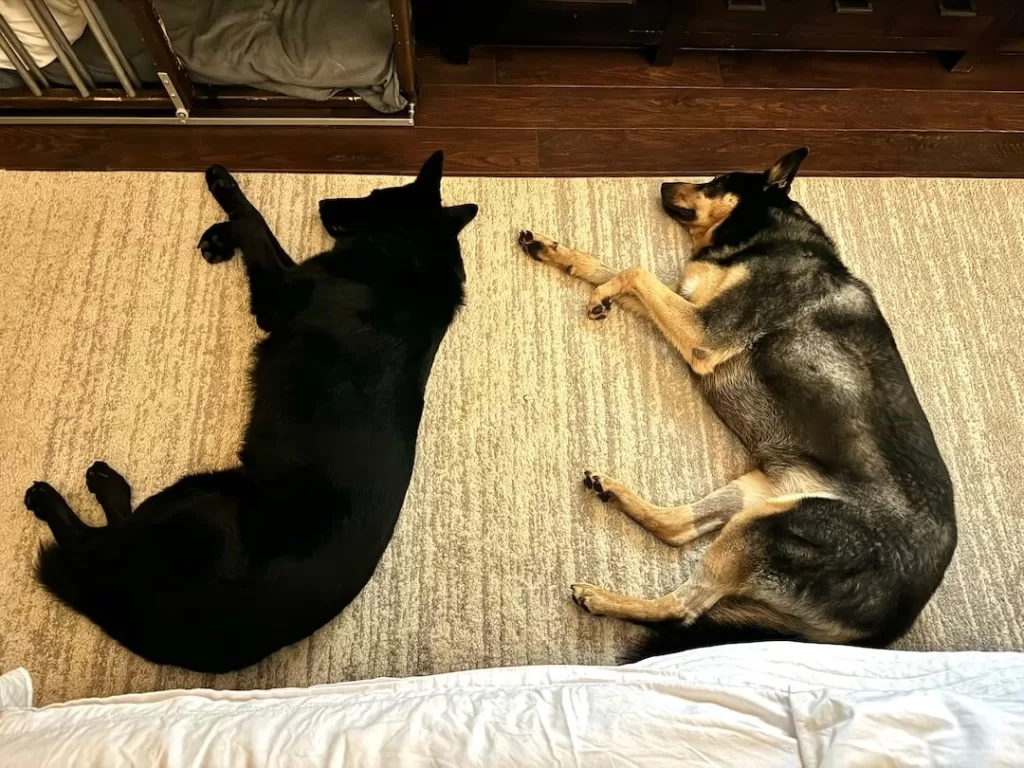
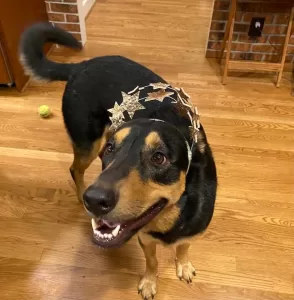
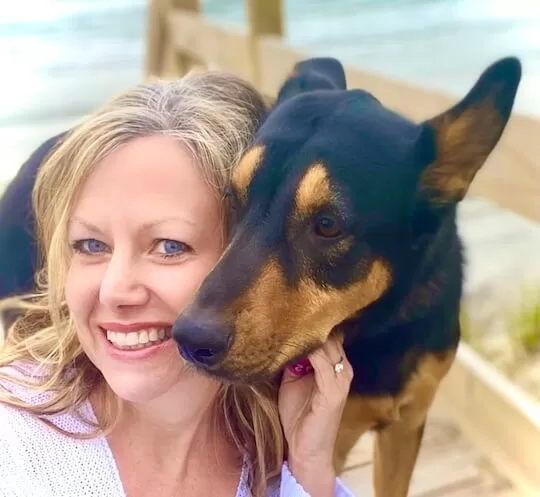 Carrie Stewart is a journalist and award-winning TV producer-turned-advocate for canine cancer awareness after working night and day for months on end to help her German Shepherd foster-fail/rescue pup, Cat the Dog, head off hemangiosarcoma for as long as she possibly can.